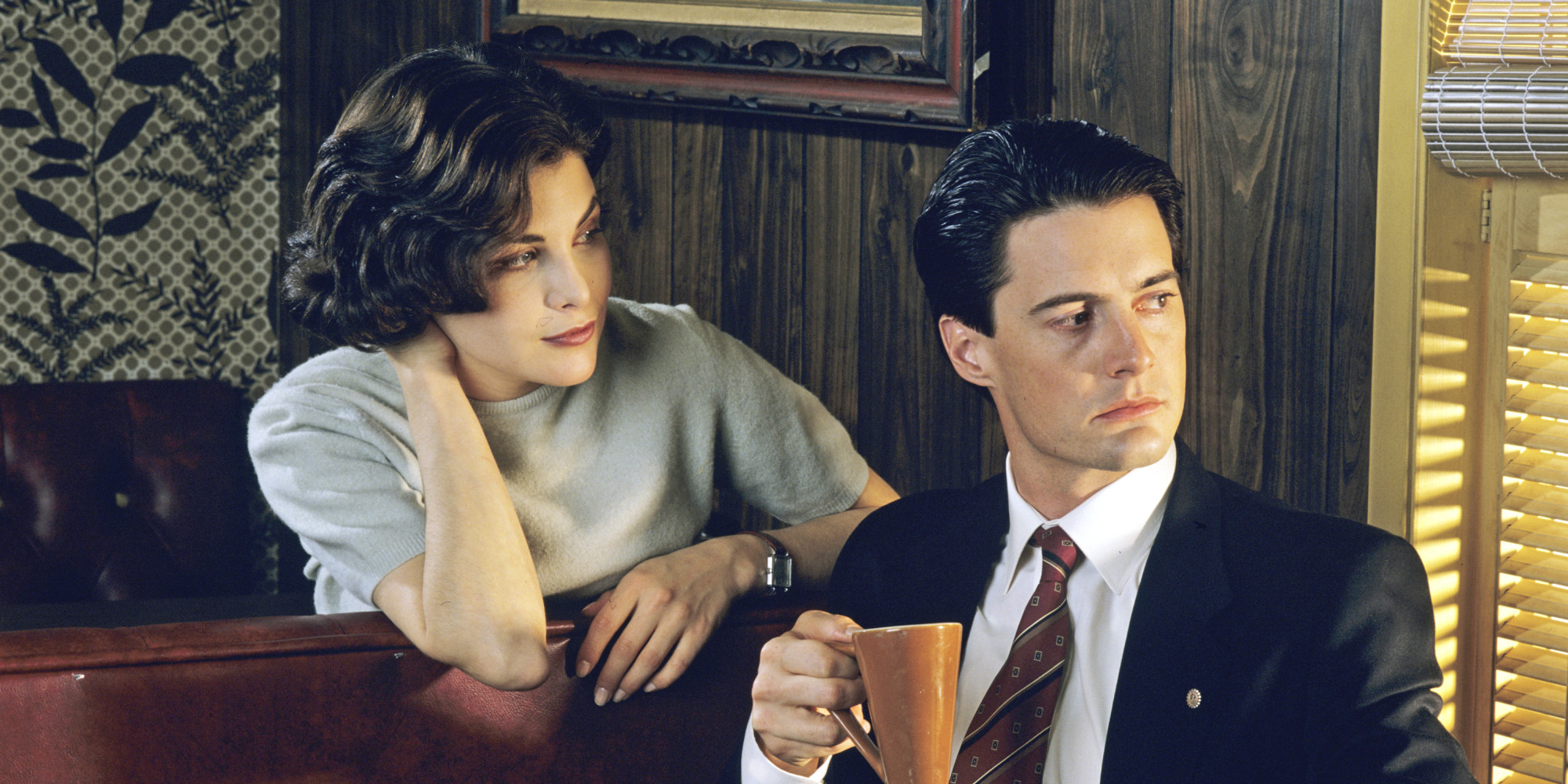
Fennell: Saltburn (2023)

Saltburn, Emerald Fennell’s second film, is every bit as spectacular as Promising Young Woman, and perhaps every bit as wilfully misunderstood by critics too. Set in 2006, the year before the first iPhone was released, it marks a shift between two discrete but related class systems – one built on wealth and one built on appearance. This is 2006 as a prehistory of the present, a time when a new beauty economy was just over the horizon, and could be felt inchoately and unconsciously in all kinds of ways. Fennell elaborates this transitional moment by way of Oliver Quick, played by Barry Keoghan, a working-class man on a scholarship to Oxford who becomes infatuated at every level with the aristocratic Felix Catton, played by Jacob Elordi. Felix is everything that Oliver is not – attractive, affluent, witty, popular – and appears to have a predilection for servile devotees, since he ends up inviting Oliver back to his manor of Saltburn for the summer. There, Oliver meets Jacob’s father James (Richard E. Grant), mother Elspeth (Rosamund Pike), sister Venetia (Alison Cotter) and cousin Farleigh (Archie Madekwe), while growing ever more enamoured with what the property represents.
On the face of it this is a familiar British narrative of class aspiration and Fennell is certainly working within that vein. From the earliest Oxford scenes, however, there is a distinct sense that beauty is quickly outweighing capital, or becoming a new kind of capital in its own right. Amidst Oliver’s set, people seem to be posing all the time, while attractive people luxuriate in the pleasure of being attractive with a new emphasis, as if expecting that good things will simply come to them. By shooting the film in an Instagram frame ratio and interspersing it with montage sequences that approximate Insta stories, Fennell presents the mid-2000s as an era that was already dreaming of Insta, even if it didn’t have the hardware yet. This new aristocracy of the attractive dissolves all the old categories of sexual orientation – or subsumes them into a new kind of sexual orientation that simply consists in being adored, and in assuming a universal adoring gaze. Against this backdrop, Oliver and Keoghan looks positively middle-aged, not least because Fennell films him more unflatteringly than in any of his performances to date. Interestingly, empathy, or at least the appearance of empathy, is arrogated by this aristocratic attractiveness too, especially in the case of Felix, who plays a similar role here to the character of Percival in Virginia Woolf’s The Waves – that is, as an emblem of male beauty who acts as a sympathetic quilting point for the characters, especially the male characters, whose homosocial and homosexual consciousness ripples around him.
The aristocratic languor and decadence of future Instagram also serves to shape the central relationship between Oliver and Felix. Oliver always seems to be watching Felix from a distance, especially when they’re up close, and likewise seems to feel Felix’s bodily presence when he’s moving away from him, as in one beautiful scene when he turns around just after leaving him at a pub, hands behind his head, caught in the afterglow of his beauty. Among its other qualities, Saltburn captures the restless excitement of a crush that is unlikely to be consummated, and so never quite leaves the realm of fantasy – or never quite migrates from body language into language proper, as when Oliver wakes up in bed one morning, and smiles upon immediately remembering that Felix exists. Throughout most of these early scenes, Fennell opts for glarey palettes, darkness in the foreground and bright light in the background, as if to evoke a splendidly sensuous and erotically rarefied ambience, always just out of reach. With this new sense of class comes a new sense of passing – passing for beautiful, although it’s only at the end of this film that we learn what this entails. Over the first half, it takes the form of inchoate and half-articulated acts and conversations: “You’re almost passing.” “For what?” “I don’t know.” Concomitantly, there are characters, such as Farley, who are determined not to ratify Oliver’s effort to pass: “Saltburn is not for you – it’s an anecdote you’ll pour into the ears of your fat kids.” Nevertheless, Oliver recognises that he has to pass through these characters in order to pass for beautiful, and that he can only arrive at Felix, commune with everything he represents, by making inroads on the beautyscape around him.

The property of Saltburn is the apotheosis of this beautyscape, helmed by Elspeth, Felix’s mother, who consequently becomes Oliver’s main object of conquest. Just before he meets her for the first time, she wonders where exactly his home city of Liverpool is located and speculates on whether or not he will be physically attractive. She then greets him with the mission statement of Saltburn – “I have had a complete and utter horror of ugliness ever since I was very young” – and assures him that his eyes, at least, are beautiful. Along with the rest of the family, Oliver is introduced to “Poor Dear” Pamela, Elspeth’s old friend, played by Carey Mulligan in cameo, who Elspeth sheepishly explains is “dull but beautiful” and is hiding out at Saltburn from her current husband, “an oppressively ugly Russian businessman.” Not only is Saltburn a haven for beauty but it is a refuse from all the ugly detritus of the world at large.
Against that backdrop, Fennell offers a vision of class mobility as it stood in 2006, at the cusp between a landed and embodied aristocracy, an older era of financial capital and an emergent era of attraction capital. This was also the peak period of Harry Potter Anglophilia, and a copy of Deathly Hallows does the rounds of Felix’s friends and family in a montage sequence that starts with them all lying naked in a field, and culminates with Oliver cementing his plan to ingratiate himself by any means necessary into this shifting class terrain. Motifs of morbid and insatiable ingestion now follow, as Oliver drinks bathwater containing Felix’s ejaculate and, armed with this primal force, tells Elspeth she is “fucking beautiful” in the midst of sipping wine, and induces Venetia to drink her own menstrual blood, causing Felix to express his concerns in a similarly gustatory mode: “Farley said you two were practically eating each other.” In a glimpse of the influencer future, Oliver realises that orchestrating, sharing and debilitating people through his ability to craft images is the key to his own upwards mobility.
Of course, Oliver isn’t simply attracted to the aura surrounding Felix but to Felix himself, and it’s here that Saltburn turns into an equally compelling period piece about what it meant to be gay in the mid-2000s. This was a time when coming out was starting to wane as a cultural phenomenon, meaning that the residues of an older closet were even more pregnant. On the cusp of full visibility, the blind spots resonated more, and Fennell captures that situation perfectly. In part that’s a function of her frame ratio and her compositions, which continually draw sensuous attention to the face and gaze, culminating with the sensuous centrepiece of the film, a sex scene between Oliver and Farley in which the two men share their bodies but never quite touch or consummate their faces. Rather than presenting 2006 as a mere ancestor of the present, Fennell also captures the way in which an older generation of gay liberation still persisted as a lived memory, a general cultural awareness, as in a scene when Farley reproaches Oliver by setting him up to sing the Pet Shop Boys’ “Rent” at a karaoke night. Given how gauche Oliver seems for not knowing the words that are about to come from his mouth, it’s clear that this track, now somewhat lost to time, is still a vestigial part of the zeitgeist in the early millennium. More comically, Elspeth reminisces about hanging out with Britpop stars in the 90s and claims to be the inspiration for Pulp’s iconic “Common People.”

Between a 00s haunted by the 80s and 90s, and a present moment haunted by the 00s, Fennell builds a burnished, smouldering and morbid romanticism that is encapsulated in the anecdote that Oliver discusses with Felix’s family – the apocryphal claim that Percy Bysshe Shelley claimed to see his own doppelganger before drowning on Lake Geneva. If Felix is Oliver’s aspirational doppelganger, then the rising tide of his love, grief and ambition almost drowns Oliver in the final act, which sees Felix dying suddenly from unknown causes at the middle of Saltburn’s hedge maze. Abject textures now spill out over the film’s mise-en-scenes, as the family share a final dinner together in which they gag, spit, vomit and choke. Oliver’s grief takes on an even more dramatic form, as he sinks to his knees on Felix’s newly-turned grave, fondles the earth, strips naked, and eventually penetrates the ground, even more attached to the fantasy of his beloved now that he has died, and longing, it seems, to be submerged beneath the ground and so join Shelley in the realm of hallowed Romantic myth.
Yet for all the agony and affect of this scene, a final twist awaits us, as Oliver frames Farley for giving Felix the drugs that killed him, gaslights Venetia when she suggests another cause of death might be possible, installs himself at Saltburn until James pays him to leave, and then, several years later, arranges to run into Elspeth, now a widow, at a local café, where she is astonished to find “How handsome you look – all grown up.” Like clockwork, he woos Elspeth, moves into Saltburn, and becomes the lord of the manor, bringing us to the framing device of the entire film, which has involved him narrating his story to an unseen interlocutor. That captive audience, we now realise, is Elspeth, who has lapsed into a coma for “unknown” reasons, although we can put the pieces together quickly thanks to a flashback that reveals that Oliver planned to supplant Felix from the moment he laid eyes on him, and that every contingency or chance encounter since then has been meticulously and scrupulously planned.
Accordingly, in these final scenes, Oliver truly becomes the inheritor of beauty and the most beautiful person in the film. As unflatteringly as Fennell films him during the first act, he now eclipses even Felix in his poise, charm, facial perfection, physical perfection and perhaps most importantly, his confidence in his own attractiveness. For the great twist of Saltburn’s prehistory of the attraction economy is that Felix is more suited to it but only Oliver understands it. Felix is born to the manor but Oliver registers how it operates and so harvests beauty in the most methodical manner possible, explaining to a prostrate Elspeth that his love for Felix was only rivalled by his hatred for what he himself didn’t possess. And in that fusion of physical awe and visceral loathing lies the libidinal economy of Instagram, which Oliver pre-empts, masters and hegemonises in the extraordinary final scene, which sees him stripping off all his clothes and dancing naked through Saltburn, in a single climactic tracking-shot, to Sophie Ellis-Bextor’s “Murder on the Dance Floor.” In this instant, Oliver knows himself to be the true beneficiary of the property, the most beautiful person within its confines, and the colonist (or perhaps revolutionary) of a new era where attractiveness counts for everything.

Leave a Reply