The X-Files, Season 2, Episode 20: “Humbug” (March 31, 1995)

“Humbug” may be the quintessential episode of The X-Files. It revolves around the murder of a carnival worker and unfolds as a series of continual revisions and recalibrations of our perspective on the case. More specifically, it continually inverts the threshold between normality and strangeness. Everything that seems normal is strange, everything that seems strange is normal. In Remediation: Understanding New Media, Jay David Bolter and Richard Grusin argue that networked 90s media was driven by two contradictory imperatives – towards an illusion of total unmediated immediacy and towards a self-referential sense of its own hypermediation. That tension is writ large and aestheticized in “Humbug” where everything that seems immediate turns out to be hypermediated through networks and situations beyond the agents’ grasp and yet these same networks and situations converge around images and tableaux of striking immediacy. As a result, it is peculiarly difficult to distinguish between reality and simulation in “Humbug,” which thereby becomes one of those episodes that seems to exist in a special world of its own, obliquely adjacent to and yet also meaningfully distinct from the series proper.
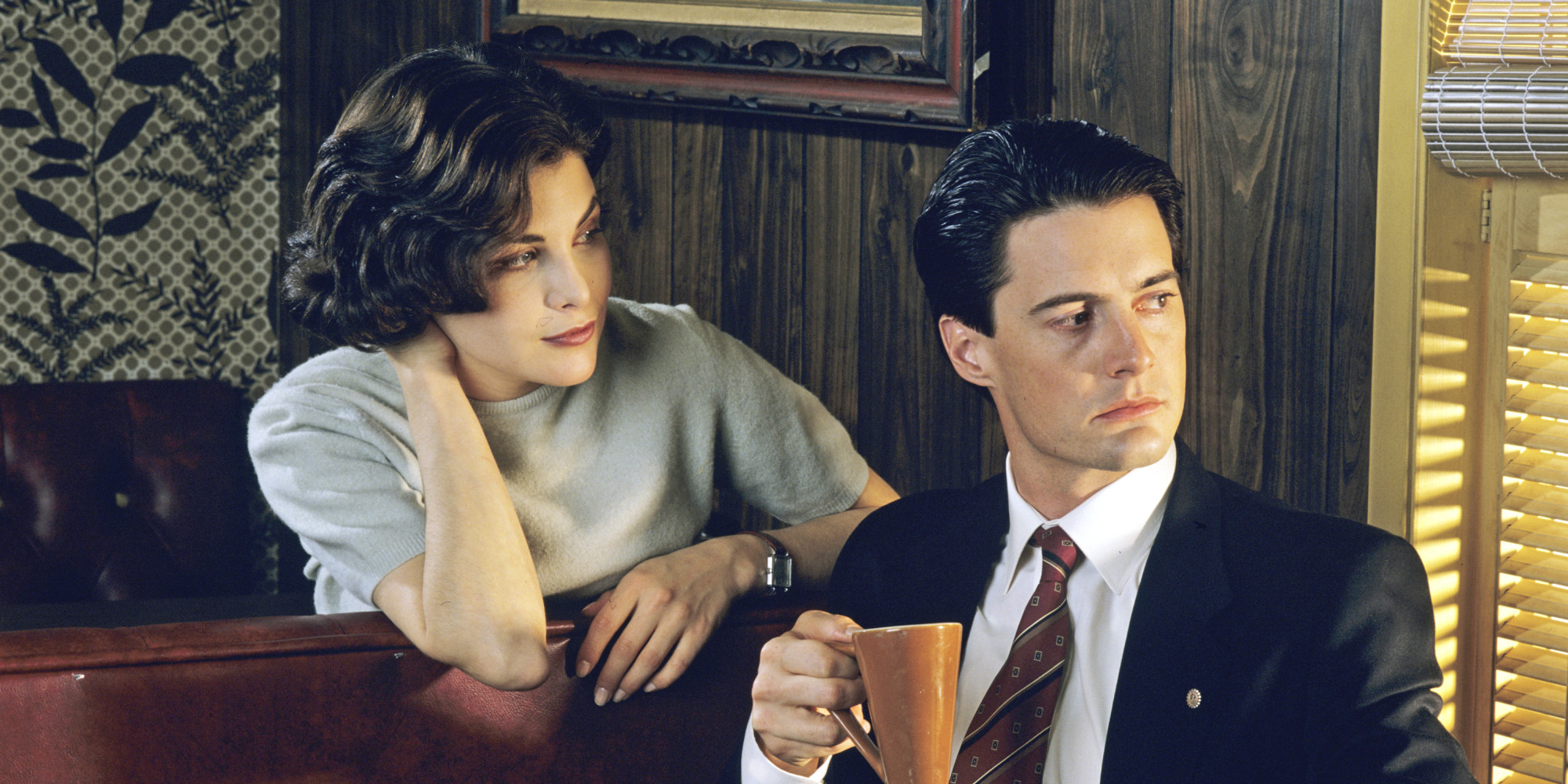
So prevalent are these thresholds between normality and strangeness, immediacy and hypermediation, and reality and simulation, that they collapse into the fabric of the episode, which takes place in a continual state of what Walter Benjamin described as “threshold-magic,” like a standing wave that blends motion and stillness into a third state. The victim is initially presented to us as a circus monster, only to be attacked and killed by what appears to be a real monster. At the funeral, an escape artist bursts out of the grave beside the funeral as the rest of the show folk impassively watch on. Later, a local cop berates Scully for suspecting show folk of being killers by reminding her that they are mere “normal” people, only for her to respond that most serial killers seem normal anyway. Meanwhile, a motel owner played by Michael Anderson (another nod in the direction of Twin Peaks) tells Mulder that to assume he’s a circus worker from his stature would be as ridiculous as assuming Mulder is an FBI agent from his outfit. And another circus worker, who has a conjoined twin attached to his body, describes how the hotel manager convinced him to give up using his body as a spectacle because it was demeaning, “so now I carry people’s luggage.”
These moments, which recur and modulate through out the episode, gradually create an impression and mood akin to that of The Wicker Man. As in that film you sense an inherent puzzle and mystery to all appearances that goes above and beyond the solution of a specific crime. Like the detective in The Wicker Man, Mulder and Scully develop an eerie feeling that the entire world they are investigating is a performance that is aimed directly at them. Images become light, airless, mercurial, such as when Scully turns around to see a man falling silently past her window. Only when she rises from her bed does she realise that there is a trampoline outside. A new synth-and-piano refrain imbues everything with the eerie emergence of the 90s thriller – the sense that some whole new realm of significance is on the verge of making itself visible and tangible, a zone that may even absorb or displace the specific discoveries necessitated by the crime. One of the main suspects is a circus performer named “The Conundrum” and a similar sense of Mystery, capital-M, hangs above the episode too. The television screen becomes like a convex mirror, with images always sliding away and vanishing whenever we try to clarify them.

The peculiar pleasure of “Humbug” therefore lies not in the solution of a crime but the ingenuity with which the episode continually modulates these thresholds. Neil Harris used the term “operational aesthetic” to ascribe this exact quality to P.T. Barnum’s circus acts and Jason Mittell adopts it to describe the “complex TV” of the 90s. The operational aesthetic is the pleasure of witnessing how things work – the enjoyment of seeing a master operator unfolding a logistically impressive spectacle while still remaining immersed in the world of the spectacle. Something of that doublethink occurs on “Humbug,” as writer Darin Morgan acknowledges by situating the circus community within the broader legacy of Barnum’s vision. We learn that this particular sideshow collective emerged out of seasonal Barnum and Bailey workers, many of whom still see Barnum as their main source of inspiration: “That’s why Barnum was such a genius – you never know where the truth ends and the humbug begins.” This mantra, a modernist version of “The truth is out there,” pervades the episode as a whole, as does Barnum’s insistence on “the great unknown” as the centrepiece of an act, and a precursor to the strangeness that must pervade any genuine operational aesthetic.
In a wonderfully poetic twist the criminal in “Humbug” exists at precisely this uncanny conjunction between strangeness and normality – the conjoined half-developed twin of the caravan park worker who left the circus for a more “normal” life. Mulder and Scully learn that this half-developed twin leaves his host’s body periodically to commit murder, and their attempt to catch him takes them deep into the circus’ mirror maze, where an exquisite sequence from director Kim Manners fractallates any residual distinction between otherness and normality, in a postmodern riff on the climax to Orson Welles’ The Lady From Shanghai. The weightless images of the episode reach their peak here, collapsing any realistic sense of space, until Mulder flies out of a tunnel to land at Scully’s feet, in an echo of the trampoliner that floated past her window earlier on.
“Humbug” is thus one of the most playful episodes to date, restlessly riffing on the series’ grand tropes. It ends with a powerfully playful moment too, as the contortionist affirms “freaks” as the last bastion of real bodies, predicts that the agents’ regulation of the freak community will turn into a new era of bodily regulation more generally, and points to Mulder as the avatar of a genetically engineered fascist future. Rather than Mulder being a genuine vanguard, “Humbug” playfully suggests that everyone in the future will look just like him, despite the fact that “nature abhors normality.” Even the typical fadeout is replaced by a John Carpenteresque cut to black, leaving us suspended at the thresholds that the episode works so hard to resonate and amplify.

Leave a Reply