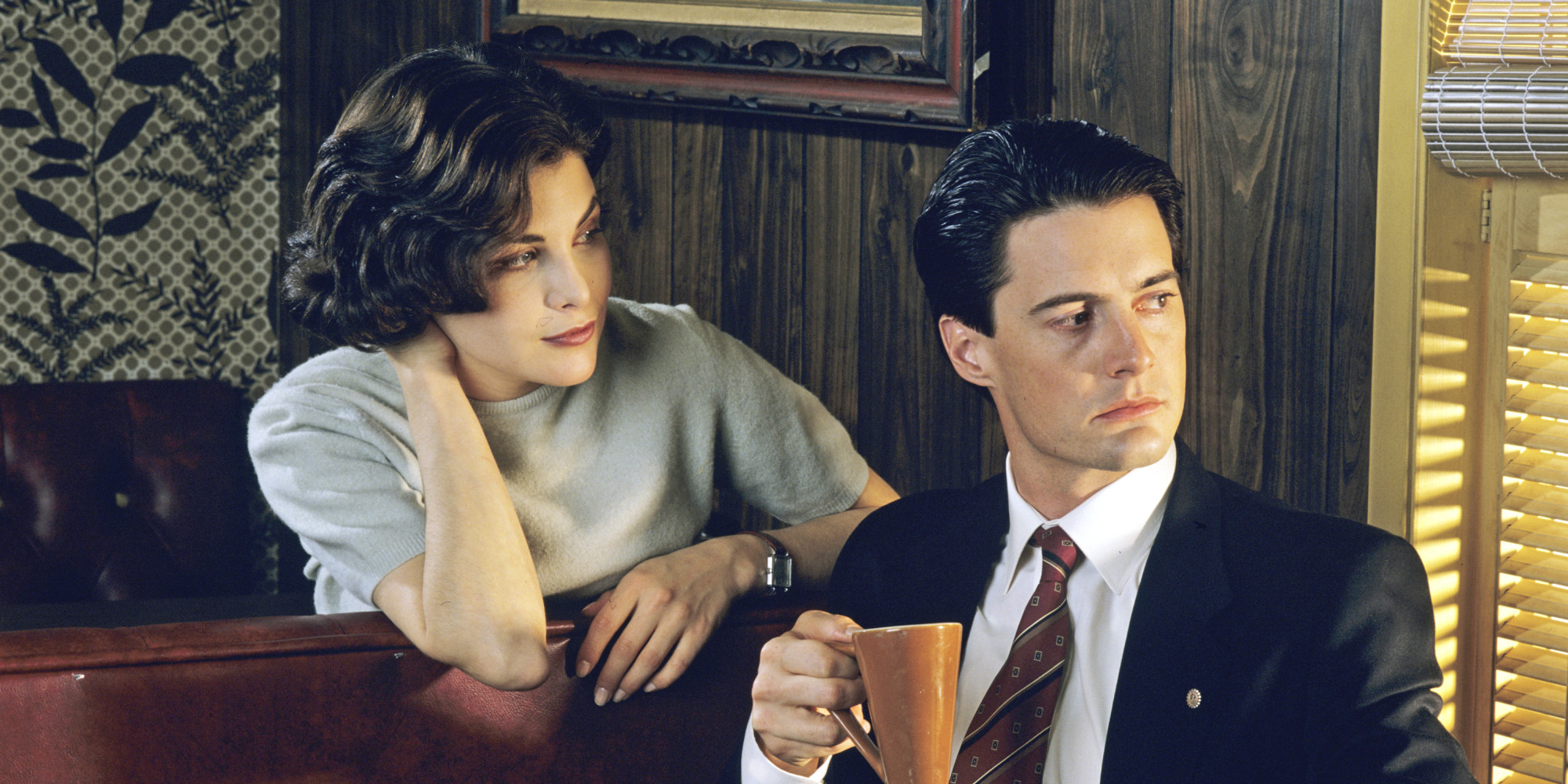
Nolan: The Odyssey (2026)

At the core of Homer’s Odyssey is what we might describe as the paradox of nostos: the narrative revolves around a homecoming whose destination is recognisable only because it has been transformed by the journey. Rather than simply travelling from Troy to Ithaca, Odysseus finds Ithaca, and his place in the world, transformed by the journey. Nolan uses that proposition as the basis of his adaptation, by suggesting that it is impossible to enact a straightforward homecoming to the Odyssey as the foundational myth of western civilization; rather, our journey back to this Homeric homeland is necessarily tempered and transformed by how far we have come from it in the intervening millennia. To that end Nolan folds Homer’s Odyssey into a broader mythic continuum that includes, most immediately, The Iliad and The Aeneid. While the broad thrust of the narrative follow’s Matt Damon’s Odysseus as he journeys home from Troy, it’s intercut with flashbacks to the Trojan siege that are inspired by the Iliad and opens with a character who only appears in the Aeneid, Sinon, the first man we see in the film, “the bravest young man I ever met” according to Odysseus, and yet also played by Elliot Page, a trans man, as if to emphasise that this will be a syncretic, composite and provocative reimagining of the Homeric myth, built upon the accretion of paratexts from the Ancient Greek world to the present day.
First and foremost, Nolan captures that syncretic quality, and the way it enhances rather than dilutes Homeric mythology, by imagining the events of the Odyssey as operating across several incommensurate temporal frames. At the core of the film is a linear approach to time, which we see in the augmented Ithacan scenes, where Penelope (Anne Hathaway), Telemachus (Tom Holland), Antinous (Robert Pattinson) and Eumeaus (John Leguizamo) are elevated into more substantial characters. We also see this linear approach in the sequentiality of Odysseus’ journey along with Telemachus’ parallel journey in search of his father, which sees him make contact with Menelaus (Jon Bernthal) and Helen (Lupita Nyong’o). Yet this linear time quickly dissolves into a more mythical time, the deep time of those waiting back at Ithaca, whose only news comes from “stories from the sea, tales of travelers,” the deeper time of those fighting an apparently neverending battle at Troy, and finally the deepest time of Odysseus’ apparent inability to ever arrive home, which begins with his fateful divergence from Agamemnon’s (Benny Safdie) fleet on the shores of the fallen city. Surrounding all this is an even more indeterminate notion of time, what might be described as the time of the gods, which occurs when Odysseus is suspended for seven years on the island of Calypso (Charlize Theron) as well as during his periodic visions of Athena (Zendaya). Nolan’s enormous IMAX landscapes – it is the first film to be shot entirely on IMAX cameras, and only falls short of the three hour mark because of the weight of more IMAX reels – also has the effect of expanding space in time, or fusing the two into one.
All these different timeframes coalesce around the unusual temporality of Odysseus’ voyage, which abstracts, distends and transforms time as it unfolds. Throughout his career, Nolan has searched for ever greater sources of cosmicity, ever more epic types of cinematic imagery, and in his later work he has paradoxically resorted to smaller scales to evoke this, culminating with the atomic melodrama of Oppenheimer. The Odyssey does something similar, restricting itself to the Mediterranean Sea, but from the vantage point of epic Greek poetry, which magnifies it until it is bigger than the cosmos, and the ocean becomes a horizon of radical unknowability, a primary antagonist to Odysseus, that exceeds anything in our own physical universe. Every island is like a new planet, while Odysseus’ trajectory often recalls the spaceflight of Interstellar, such as when he steers into the whirlpool of Charybdis to shoot up the other side in much the same way as the crew of the Endurance use gravity to sling themselves around enormous celestial bodies. Likewise, the inhabitants of these islands are even more unknowable than aliens, and while all of the sequences are spectacular, my favourite was Odysseus’ encounter with the Laestrygonians, just because Nolan provides so little context for why these giants promptly kill two-thirds of his men and destroy two of his three ships. By omitting the Laestrygonians’ cannibalism, and reducing Odysseus to an oblivion that sits eerily with the supposed innocence of the child who calls the giants to order, Nolan evokes a world too other, too strange, to be properly explained.

For that reason, beaches and shores take on a remarkable liminality that evolves throughout the film. We move from the beaches that introduce Cyclops, the Laestrygonians and Samantha Morton’s Circe, to Circe’s instructions to “head north, into the twilight, and travel inland, until a river of fire meets a river of ice,” a shore that doubles as the threshold to Hades. In times, littoral thresholds become dissociated from literal landings; the whole point of the sirens is not to make a landing, and the whirlpool of Charybdis embeds the threshold in the water itself. By the time Odysseus arrives at Calypso’s island, all distinction between land, sea and sky has evaporated, turning the world into an endless shore, a space of continuous liminal becoming, and yet the strangest beach is reserved for Ithaca, where Odysseus awakens after finally giving his agency over to Zeus, to find that none of the radical alterity he has experienced could quite prepare him for the summative strangeness of arriving home. This is just one of many moments in the film where you feel the profound influence of C.P. Cavafy’s poem “Ithaka,” with its insistence that the very process of returning home transforms what home means, such that Ithaka lies in the journey as much as (perhaps more than) the arrival: “As you set out for Ithaka, hope your road is a long one.”
As these littoral thresholds escalate, they imbue Odysseus’ landings with an enormous sense of apprehension, until the sheer act of looking becomes intertwined with portents of unimaginable futurity, like the “relics of a future war” that animate Tenet. This one of our first hints that Nolan is using the film to comment on the present state of geopolitics – and possibly, like W.H. Auden’s “The Shield of Achilles,” diagnosing Homeric myth as the foundational pathology of western civilisation as much as its foundational myth. This equation of imagery with unbearable futurity is one of Nolan’s key signatures – in Memento, tattooed images literally contain and guide the protagonist’s future, while The Dark Knight set itself to achieve the impossible and generate images whose catastrophic futurity might exceed the terrorist spectacle of September 11, still the most terrifying tableau I have ever seen. In The Odyssey, that project takes on a more reflective and sombre quality, as if Nolan is questioning whether images still have the capacity to generate possible futures in that way, and whether the future contained in Homeric myth is the one we still want to inhabit.
One of the main criticisms of the film is that Nolan updates it too much by not presenting the Greek gods as discrete figures or characters. But I think this is to miss the point of Nolan’s mythic realism, which factors in the gods as facets of the natural world in a way that makes them both a more straightforward and a more troubling presence than, say, in Wolfgang Peterson’s Troy. It’s an approach that reminded me of Robert Eggers’ The Witch, which doesn’t present the supernatural as a distinct aspect of Puritan American life but as a pervasive part of what reality meant for this particular community. Mythology in Nolan’s Odyssey emerges from nature, as an approximation for systems too vast to comprehend, and it is this same mythic realism that makes the island sequences so evocative: wind in the trees, and snow drifting along the shore, in the midst of radical otherness. Like the dreams of Inception of the magic of The Prestige, or even the temporal paradoxes of Tenet, the gods are objective and subjective at once, an explanatory framework that is too elastic to ever fully contain any one quandary, and quite capable of being exploited by the cynical for their own purposes. Watching it, I wondered if this was exactly how Ancient Greek religion felt – like a collection of numinous and nebulous entities whose ultimate fickleness lay in the inconsistency with which they held up the hermeneutic role they were supposed to occupy.

Much of the film’s rhythm thus comes from its lapses between the unvarnished primality and vitality of the world and the – often thwarted, but never fully futile – attempts to impose structure through myth. For all that Nolan has been accused of pandering to the present moment in a panoply of ways, his Odyssey is quite resistant to the hyper-rationalism and compartmentalised messaging that afflicts textual practice across many media today, since Odysseus’ journey presents us with a world in which there are no easy decisions, and in which no moral, religious or even personal code is fully commensurate to the strangeness of reality. Heroism here involves approaching the limits of the human in the face of radical otherness, means accepting that you may be faced with unbearable choices (whirlpool or monster?) and that while complete surrender is eventually necessary (Odysseus casting himself out to sea from Calypso’s island and trusting in Zeus to bring him home) even it may not provide the total catharsis you are seeking. In other words, Nolan recognises that Homer’s Odyssey is most powerful when it doesn’t provide catharsis – after all, this is presumably the reason we need to revisit it again and again – much as Odysseus’ most powerful experience in the entire narrative is his exposure to the sirens, with their promise of “all the things you wanted to be and all the things you never wished for” and their central revelation that he doesn’t really want to go home, that his journey must displace its arrival.
And this brings us to the central paradox of the Odyssey, which Nolan evokes so well: that Odysseus’ voyage doesn’t delay his homecoming but changes what home can be. In a meta-commentary on the act of adapting the fundamental Western myth, Nolan asks whether home can still exist in the same way when you have moved far enough away from it. Again, this feels fundamentally opposed to some current trends in Hollywood, which dictates that a character must learn a lesson and then emerge the same person but with a properly altered moral vocabulary. By contrast, Odysseus “journey” is not a contained linear entity but a manifestation of the broader mutability and metamorphosis of all things. It is as much Ovidian as Homeric in its temperament, as we see in Nolan’s fascination with the malleability of human flesh, whether through the question of Telemachus’ eyes and nose being used as proof of death, the ninety-degree rotation of Cyclops’ eye from its conventional orientation, which makes his face look like it hasn’t been finished, or Circe’s vigorous and visceral massaging of animal features into the bodies of her hapless victims. In Deleuze and Guattari’s terms, Nolan uses his immaculate IMAX voids to transform the Mediterranean into smooth space, a zone of radical and continuous becoming, in which each new island only expands the mystery, each burst of knowledge increases unknowing, and experience occurs faster than it can be processed. It is the medieval plus ultra, the “further beyond,” an endless frontier whose limits recede further with each new discovery, and so acts as an apotheosis to Nolan’s fundamental epistemological and temporal mythology, in which answering questions about the world only renders it stranger.
So radically does that transfigure the process of homecoming that it fundamentally reorients the relation between Troy and Ithaca as well. Rather than “returning” from Troy to Ithaca, Odysseus’ journey blurs them along different timelines, like a quantum vision of the West’s future. On the one hand, for most of the Odyssey, Ithaca remains in a state of chaos, held captive by an infernal horde of thugs, waiting for the return of a salvational leader who can restore order, where hope is kept alive by moments of lyrical revelation: “He’s alive – I can sense it in the wind and the waves.” It’s not hard to see in this scenario a mirror of Trump’s America and of the rise of neo-fascist regimes across the west, especially since Nolan augments this section of the narrative considerably. Nor is it hard to see in Penelope and Telemachus’ longing for their husband and father a poignant image for Americans, Italians, Hungarians and other citizens contending with the rise of far-right theocracy. Yet this is complicated by the alternative timeline in which, far from qualifying Odysseus to restore Ithaca, the siege of Troy represents exactly the same barbarism that has laid hold of the Ithacan court in the form of Antinous and his thugs. For Nolan presents an anti-mythology of Troy, including the narrative of the horse but filtering it through melancholy retrospection, so by the time we see it, Odysseus has already decided that “we violated all that’s ever been sacred between people and turned a fight into a hunt.” At the very moment the Greeks become the West’s first great empire, they are unable to return “home” to the moral codes their imperialism was built upon, a paradox captured in the film’s final twist: that the “Sea People” that everyone seems to fear as harbingers of a new age of barbarism (based on those identified by Egyptian inscriptions towards the end of the Bronze Age) are in fact the Greeks themselves, turned barbaric by “conquering” Troy.

No doubt, we live in a time when blandly criticising the West has become a kind of default intellectual posture – and it’s often a tiresome one. But Nolan does something less showy and more thoughtful here, something more in line with Auden’s great deconstruction of Troy in “The Shield of Achilles” or Walter Benjamin’s iconic observation that “There is no document of civilisation which is not at the same time a document of barbarism.” As if generalising Trump’s cry to “Make America Great Again” to a orientation to the West as a whole, Nolan asks if we really do want to return to the foundational moment of supposed Western primacy – and what kind of civilisation might really emerge from this ethos of unceasing warfare, this originary “forever war” (of precisely the kind, ironically, that MAGA has defined itself against). Can a nation, Nolan asks, that has built its moral order on bloodshed and conquest, and reached for mythology to justify that, really return “home” to its moral order in times of peace? The Odyssey is not a perfect film. I agree with some commentators that its cast is almost uniformly milquetoast and that it has a pretty facile approach to whiteness, adhering at times so strictly to contemporary Hollywood casting norms that it erodes the Greek specificity of the Homeric text (not a single Greek or even Mediterranean actor appears in any of the lead roles). But the endurance of Nolan’s final question, and the materiality with which he brings it to the screen – my entire cinema was shuddering with the poetic beat of Ludwig Goransson’s soundtrack, with its custom bronze gong – is still a remarkable achievement, a high point of his career, closest to Cavafy’s vision above all: “And if you find her poor, Ithaka won’t have fooled you/Wise as you will have become, so full of experience/you’ll have understood by then what these Ithakas mean.”

Leave a Reply